SCIENCE CLASS- 8
CHAPTER-3 (Health: The Ultimate Treasure)
Question 1. Group the diseases shown in the images as communicable or non-communicable.
Given Diseases: Cold and Flu, Typhoid, Diabetes, Asthma, Chickenpox
Answer:
| Communicable Diseases | Non-Communicable Diseases |
|---|---|
| Cold and Flu | Diabetes |
| Typhoid | Asthma |
| Chickenpox |
Explanation: Communicable diseases spread from one person to another through air, water, food or direct contact. Non-communicable diseases do not spread from one person to another.
Question 2. Diseases can be broadly grouped into communicable and non-communicable diseases. From the options given below, identify the non-communicable diseases.
(i) Typhoid (ii) Asthma (iii) Diabetes (iv) Measles
Answer:
Option (b) (ii) and (iii)
Asthma and Diabetes are non-communicable diseases because they do not spread from one person to another.
Question 3(i). There is a flu outbreak in your school. Several classmates are absent, while some are still coming to school coughing and sneezing. What immediate actions should the school take to prevent further spread?
Answer:
- Advise sick students to stay at home until they recover.
- Encourage everyone to wear masks if required.
- Ensure regular hand washing with soap.
- Maintain cleanliness in classrooms and common areas.
- Keep classrooms well ventilated.
- Educate students about cough and sneeze etiquette.
- Inform parents about preventive measures.
Question 3(ii). If your classmate, who shares the bench with you, starts showing symptoms of flu, how can you respond in a considerate way without being rude or hurtful?
Answer:
- Speak politely and kindly.
- Suggest that the classmate visit the school nurse or doctor.
- Offer help if needed.
- Avoid making fun of or isolating the classmate.
- Encourage proper hygiene practices.
This shows care and responsibility towards others.
Question 3(iii). How do you protect yourself and others from getting infected in this situation?
Answer:
- Wash hands frequently.
- Avoid touching the face unnecessarily.
- Cover mouth and nose while coughing or sneezing.
- Use a handkerchief or tissue.
- Maintain cleanliness around you.
- Avoid sharing personal items such as water bottles.
- Stay home if you feel unwell.
Question 4(i). Your family is planning to travel to another city where malaria is prevalent. What precautions should you take before, during and after the trip?
Answer:
Before the Trip:
- Consult a doctor if necessary.
- Carry mosquito repellents and mosquito nets.
- Pack full-sleeved clothes.
During the Trip:
- Use mosquito repellents regularly.
- Sleep under mosquito nets.
- Wear full-sleeved clothing, especially during evening hours.
- Avoid stagnant water areas.
After the Trip:
- Monitor for symptoms such as fever, chills and headache.
- Seek medical attention immediately if symptoms appear.
Question 4(ii). How can you explain the importance of mosquito nets or repellents to your sibling?
Answer:
Mosquitoes can transmit diseases such as malaria and dengue. Mosquito nets and repellents protect us from mosquito bites and reduce the risk of getting these diseases. Therefore, using them regularly helps keep us healthy and safe.
Question 4(iii). What could happen if travellers ignore health advisories in such areas?
Answer:
If travellers ignore health advisories, they may get infected with malaria or other mosquito-borne diseases. This can result in serious illness, hospitalisation and even life-threatening complications if treatment is delayed.
Question 5(i). Your uncle has started smoking just to fit in with his friends, even though it is well known that smoking can seriously harm health and even cause death. What would you say to him to make him stop, without being rude?
Answer:
I would politely explain that smoking can cause serious diseases such as lung cancer, heart disease and breathing problems. I would remind him that true friends do not force harmful habits on others and encourage him to quit smoking for his health and family's well-being.
Question 5(ii). What would you do if your friend offers you a cigarette at a party?
Answer:
I would firmly but politely refuse the cigarette. I would explain that smoking is harmful to health and that I do not want to develop unhealthy habits.
Question 5(iii). How can schools help prevent students from indulging in such harmful habits?
Answer:
- Conduct awareness programmes on the harmful effects of tobacco and smoking.
- Invite doctors and health experts for guidance.
- Promote healthy lifestyles and sports activities.
- Provide counselling services.
- Encourage positive peer influence.
Question 6. Saniya claims to her friend Vinita that “Antibiotics can cure any infection, so we don't need to worry about diseases.” What question(s) can Vinita ask her to help Saniya understand that her statement is incorrect?
Answer:
Vinita can ask the following questions:
- Can antibiotics cure viral diseases such as common cold, flu or chickenpox?
- If antibiotics cure all infections, why do doctors prescribe different medicines for different diseases?
- Why do doctors advise completing the full course of antibiotics?
- What happens when antibiotics are used unnecessarily?
- Can overuse of antibiotics lead to antibiotic resistance?
Explanation:
Antibiotics are effective only against bacterial infections. They do not work against viral infections such as the common cold and flu. Unnecessary use of antibiotics may lead to antibiotic resistance, making bacterial infections more difficult to treat in the future.
Question 7. The following table contains information about the number of dengue cases reported in a hospital over a period of one year.
Given Data:
| Month | Number of Dengue Cases |
|---|---|
| January | 10 |
| February | 12 |
| March | 15 |
| April | 18 |
| May | 22 |
| June | 40 |
| July | 65 |
| August | 65 |
| September | 65 |
| October | 30 |
| November | 30 |
| December | 20 |
Bar Graph
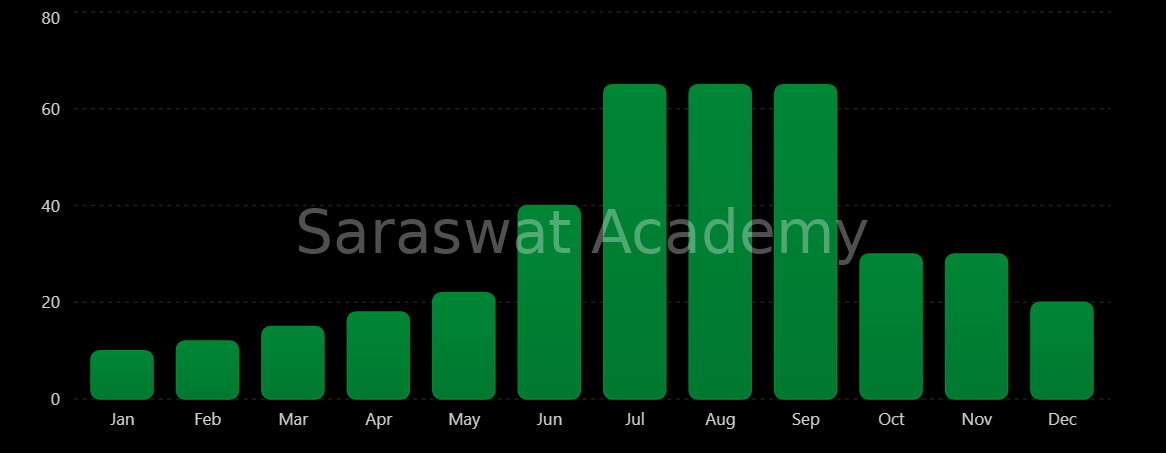
(i) In which three months were the dengue cases highest?
Answer:
The dengue cases were highest in:
- July
- August
- September
Each of these months recorded 65 cases.
(ii) In which month(s) were the cases lowest?
Answer:
The lowest number of dengue cases was reported in January.
Number of cases = 10
(iii) What natural or environmental factors during the peak months might contribute to the increase in dengue cases?
Answer:
The increase in dengue cases during July, August and September may be due to the following environmental factors:
- Heavy rainfall during the monsoon season.
- Collection of stagnant water in pots, tyres, coolers and drains.
- Increased breeding of Aedes mosquitoes.
- High humidity and warm temperature which favour mosquito growth.
- Poor drainage and waterlogging in many areas.
These conditions increase mosquito populations and enhance the spread of dengue.
(iv) Suggest a few preventive steps that the community or government can take before the peak season to reduce the spread of dengue.
Answer:
The following preventive measures can help reduce dengue cases:
- Remove stagnant water from surroundings.
- Clean water tanks, coolers and containers regularly.
- Use mosquito nets and mosquito repellents.
- Conduct awareness campaigns in schools and communities.
- Spray insecticides in mosquito-prone areas.
- Ensure proper drainage systems.
- Cover water storage containers properly.
- Encourage people to wear full-sleeved clothes.
Question 8. Imagine you are in charge of a school health campaign. What key messages would you use to reduce communicable and non-communicable diseases?
Answer:
The following messages can be included in a school health campaign:
For Communicable Diseases
- Wash hands regularly with soap.
- Drink clean and safe water.
- Cover mouth and nose while coughing or sneezing.
- Keep surroundings clean.
- Take vaccinations on time.
- Avoid contact with infected persons when possible.
For Non-Communicable Diseases
- Eat a balanced and nutritious diet.
- Exercise regularly.
- Avoid smoking, tobacco and alcohol.
- Get adequate sleep.
- Manage stress effectively.
- Maintain a healthy body weight.
Slogan: "Healthy Habits Today, Healthy Life Tomorrow."
Question 9. It is recommended that we should not take an antibiotic for a viral infection like a cold, a cough, or flu. Can you provide the possible reason for this recommendation?
Answer:
Antibiotics are effective only against bacterial infections.
Cold, cough and flu are generally caused by viruses.
Therefore, antibiotics cannot kill viruses and will not cure these diseases.
Unnecessary use of antibiotics may:
- Cause side effects.
- Kill useful bacteria in the body.
- Lead to antibiotic resistance.
Antibiotic resistance makes bacteria stronger and future bacterial infections more difficult to treat.
Question 10. Which disease(s) among the following may spread if drinking water gets contaminated by the excreta from an infected person?
Given Diseases:
- Hepatitis A
- Tuberculosis
- Poliomyelitis
- Cholera
- Chickenpox
Answer:
The diseases that may spread through contaminated drinking water are:
- Hepatitis A
- Poliomyelitis (Polio)
- Cholera
Explanation:
These diseases spread through the faecal-oral route, where germs from the excreta of an infected person contaminate food or water.
Tuberculosis spreads through air droplets released during coughing or sneezing.
Chickenpox spreads through direct contact and airborne droplets.
Key Learning Points
- Dengue spreads through the bite of infected Aedes mosquitoes.
- Stagnant water serves as a breeding ground for mosquitoes.
- Communicable diseases can spread through air, water, food or direct contact.
- Non-communicable diseases do not spread from person to person.
- Antibiotics work only against bacterial infections.
- Clean drinking water is essential for preventing water-borne diseases.
- Communicable diseases spread from one person to another.
- Non-communicable diseases do not spread between people.
- Good hygiene helps prevent infectious diseases.
- Mosquito nets and repellents protect against malaria.
- Smoking causes serious health problems and should be avoided.
- Antibiotics work only against bacterial infections.
- Misuse of antibiotics can lead to antibiotic resistance.