ENGLISH CLASS- 10
CHAPTER-8
(Bholi)
Bholi
1. Bholi had many apprehensions about going to school. What made her feel that she was going to a better place than her home?
Bholi had many fears about going to school because she remembered how her brothers had cried and protested when they were first sent there. She also worried that she might be treated badly or taken away from her family.
However, her fears gradually disappeared when her mother bathed her, dressed her in clean clothes, and carefully prepared her for the day. No one had ever paid such special attention to her before. She thought that she was being taken to a place better than her home, where people would care for her and treat her kindly.
2. How did Bholi's teacher play an important role in changing the course of her life?
Bholi's teacher played a crucial role in transforming her life. Unlike others who mocked and ignored Bholi because of her appearance and stammering, the teacher treated her with kindness, patience, and respect.
She encouraged Bholi to speak without fear and assured her that with education and practice she would overcome her difficulties. The teacher gave Bholi confidence, self-respect, and a sense of purpose. Through education, Bholi became intelligent, independent, and courageous. Ultimately, she gained the confidence to reject an unfair marriage proposal and make her own decisions. Thus, the teacher completely changed the direction of Bholi's life.
3. Why did Bholi at first agree to an unequal match? Why did she later reject the marriage? What does this tell us about her?
At first, Bholi agreed to marry Bishamber because she believed that she had little choice. She considered herself fortunate that someone was willing to marry her despite her physical appearance and speech defect. She also wanted to obey her parents and ensure their happiness.
However, she rejected the marriage when Bishamber demanded five thousand rupees as dowry after noticing the marks of smallpox on her face. She realized that he was greedy, selfish, and disrespectful.
This decision shows that Bholi had become confident, self-respecting, and courageous. Education had taught her to stand up against injustice and value her dignity. She refused to compromise her self-respect for the sake of marriage.
4. Bholi's real name was Sulekha. We are told this right at the beginning. But only in the last but one paragraph is Bholi called Sulekha again. Why do you think she is called Sulekha at that point in the story?
The name Sulekha means a person with good qualities and good writing. At the beginning of the story, she is called Bholi, which means simple or innocent, because she is timid, uneducated, and lacks confidence.
In the last but one paragraph, she is called Sulekha again because she has undergone a remarkable transformation. Through education and guidance, she has become an intelligent, confident, and self-respecting young woman. The use of her real name at this point symbolizes her growth, maturity, and achievement of her true identity.
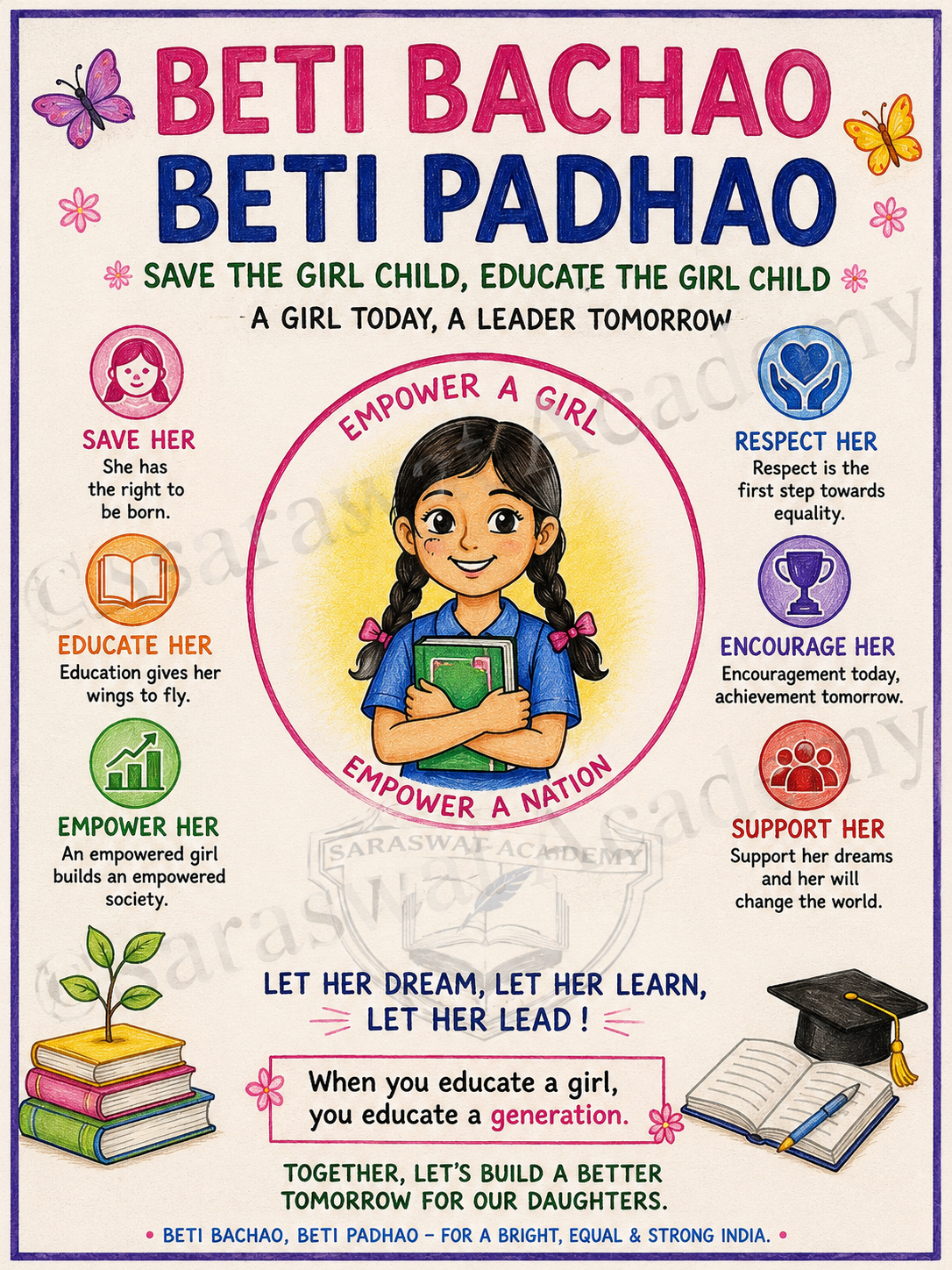
5. Bholi's story must have moved you. Do you think girl children are not treated at par with boys? Read about the scheme and design a poster on 'Beti Bachao, Beti Padhao'.
Yes, in many parts of society, girls have not always been treated equally with boys. However, education, awareness, and government initiatives are helping to change these attitudes. Every girl deserves equal opportunities, respect, and education.
Poster: Beti Bachao, Beti Padhao